Water Dog

This is the last creature of the Americas we are going to dive into. After this one, we will only have four mythological creatures left, all located in Oceania! Gah! Feels like just yesterday we were diving into the world of mythology.

What should we cover next?!


ahuizoti.jpg

Ahuizoti | Mexico

Aquatic canine creature with a tail-hand.

  • The fur on this hound clumps together to create spikes. Its hands are capable of manipulation, similar to humanoids.
  • It likes humans, particularly nails, eyes and teeth. Shield yourself!
  • You’ll find this creature near water. Any bodies of water. Caves near water. All of the above. As long as it’s near water.
  • If prey is spotted, it’ll use its unique tail to swipe them up and drown them.
  • Whoever is taken, their sacrificed to the rain god, supposedly.

Consistently Inconsistent

Anyone writing a novel should always remember: consistently consistent. From the basics like character names to heavy lore details that provide rich world-building.

Telling a linear story will make you, as the writer, feel better about your product. You’ll feel encouraged to share your story more so than before.

consistent.gif

In order to write consistently within the words, planning is necessary. We are definitely a broken record when it comes to this topic, but that should prove how important the process of planning out your novel really is. We’re talking plot outlines, world outlines, character bios, etc. All of these are needed to create the base of your novel. If you’re not incorporating mapping time, you’re not going to write a consistent story. You’ll end up writing ten different inconsistencies and your book will never see a virtual shelf. Ever. If you need to research, take time during this stage of your writing to get the gist of it. Relating your world to the reader’s will build the bond everyone wants to have with their favorite books.

Once writing has begun to unfold, your writing style for the novel at stake should remain relatively consistent (unless it’s part of the storyline…then do what you must! Just do it in a cohesive manner.) Tone with the narrator and characters shouldn’t change throughout the novel unless tragedy strikes and alters their perspectives. The plot can change slightly, as you uncover more during the writing process, but if it’s drastic…return to your outlines. You can easily incorporate these new changes in your story; it’ll also help you see where the changes will begin to morph the rest of the tale and avoid any inconsistencies!

On Location

It’s not in everyone’s best interest to sit in their home office to write. Works for some, not for the rest. A few may take a ride in their car to a local place they find inspirational. Others take a hit to the wallet and hop on a place to their most relaxing destination. The purpose isn’t to escape the process of writing, but lay the seed of inspiration and nourish it with the surrounding scenery.

Is anyone a location-inspired writer? If so, where do you like to write?

Coffee shops?

The beach in a comfy chair with your toes in the sand?

In a hotel with a magical view of snow-capped mountains?

Local park?

travel.gif

The Jungle Dwarf

curupira.png

Curupira Brazil

Jungle genie with bright red hair and backwards feet.

  • Curupira is a blend of West African and European fairies, and was once considered a demon.
  • The name comes from the Tupi language, which translates to covered in blisters.
  • You’ll be able to spot this creature from a mile away. He has bright red/orange hair, usually resembles a man or dwarf, and has feet turned backward.
  • How can this little guy be threatening? He creates illusions and produces sounds to drive their victim to go crazy.
  • Don’t worry…they only go after poachers and hunters; those who take from the jungle they live in.

La Chupacabra

chupacabra.jpg

Chupacabra Puerto Rico

Bear-sized, spiky creature that drinks livestock blood.

  • Breaking down the word, chupacabra can be translated to “goat-sucker” (chupar means ‘to suck’ while cabra means ‘goat’.)
  • It’s primarily found in Puerto Rico but it’s been reportedly seen as far north as Maine, and as far south as Chile. Occasionally, you’ll hear of the creature popping up in Europe.
  • The chupacabra’s first reported attack happened in 1995. This myth is still very young!
  • Appearance varies on the place; it can be the size of a small bear, can have scales (making it more reptilian), a sharp spine, or may have quills. But guess what? It’s only supposedly 3 feet tall (can be up to four feet) and hops like a kangaroo. It’s sometimes described like a dog.
  • They’re motive is similar to a vampire; their victims are always found drained of blood – not slaughtered.

Hurling Questions

Not only are we a super-cool blog on the internet, talking about the ins-and-outs of publishing and writing, but we’re a literary agency, first and foremost!

Some things you may wonder about us (or agencies in general) may be misguided by other postings on the internet. It’s best to ask the source directly to find out if the match is real! This doesn’t go for us, it goes for anyone you manage to get in touch with!

questions.gif

  1. Ask the individual you’ve made contact with how they got to where they are (in life, not your inbox.) Knowing our background helps give you perspective on our passions and how they may or may not coincide with yours.
    1. A great follow-up is asking how long we’ve been in the biz. Passion and credentials.
  2. Sales are really important in this part of the business. Don’t shy away from asking. We won’t give you the nitty-gritty details but we will tell you bout some of our accomplishments as of late!
  3. Before you query, ask us if we’re looking! And if we are, what are we looking for! Each agency has criteria (and posts it on their website most likely) which must be met. Realistically speaking, “The Great American Novel” is not one of them.
  4. Our expertise is important to note as well. Each agency covers every aspect of publishing, but sometimes – sometimes – you’ll come across an agency that’s REALLY good at something. What is it?
  5. Communication is so important to both agency and client. Get it done as soon as possible: how would you like to touch base with your agency? Establish it! Most situations now involve email, but who knows, we can set up calls, video chats, dinner and a movie (no book adaptations, thank you)…(totally joking!)

The most important thing to remember is every agency is different and the people within differ from the others you may have spoken to. It’s always good to keep an open mind to whoever you come across, inside the publishing world and out!

Canada’s Loch Ness Monster

ogopogo.jpg

Ogopogo British Columbia

Lake-dwelling serpentine monster.

  • Sightings started in the 19th century but have been discredited to being a legendary water spirit, living in Lake Okanagan.
  • Other than having the body of a snake, the head has been described to be that of a snake, horse, or even a goat. Sometimes it has long ears or horns with blue or brown scales.
  • It eats flesh. That means humans…turn into prey. Hunters become the hunted. Native Americans never traveled across the lake without sacrificial meals on board. Now, its believed the monster dwells in one of the corners of the lake.
  • It’s very similar to the Loch Ness monster of Scotland.
  • The ogopogo is sometimes thought to be an extinct whale or marine reptile.

Out Of Control

Relinquishing creative control can feel like the end of the world. One cannot simply do everything and have a successful book launch.

not mad.gif

  • Let your editor edit. You’re paying them to do so. Give them space. Let them work. And if they don’t meet their deadline, let ’em have it. All hell will break loose. Be easy on your editor who’s focusing on the substantive editing. They need to pick apart your story and ask questions. Don’t flip out on them. Take a chill pill.
  • Unless you’re designing your own cover, you’ll also need to take a step back and tell yourself: “I’m not the expert.” Give the designer what they need, info-wise. Maybe a little more. Be realistic in your feedback and don’t get irrationally angry if they don’t follow your original request. They may have a marketing tactic or two behind their reasons why. Just ask.
  • If you’ve hired PR to help with your marketing, then you need to lay out your terms and conditions to a degree. Once again, you’re paying this person to do a job for you. They’re the expert. Not you! They will treat your upcoming work with TLC and sketch out a marketing plan tailored to a genre and audience. If they don’t, something isn’t being done right. Ensue virtual yelling.

Think of this time away from your work as a vacation. Go to the beach, go for a hike. Drink a nice, cold pina colada. And when you’re notified from any of the people you’ve hired about your book…

Panic.

The Cannibal Monster

This is one of the last two areas of the world we are traveling too. So, let’s venture into the deep woods of the Americas to start the beginning of the final countdown!


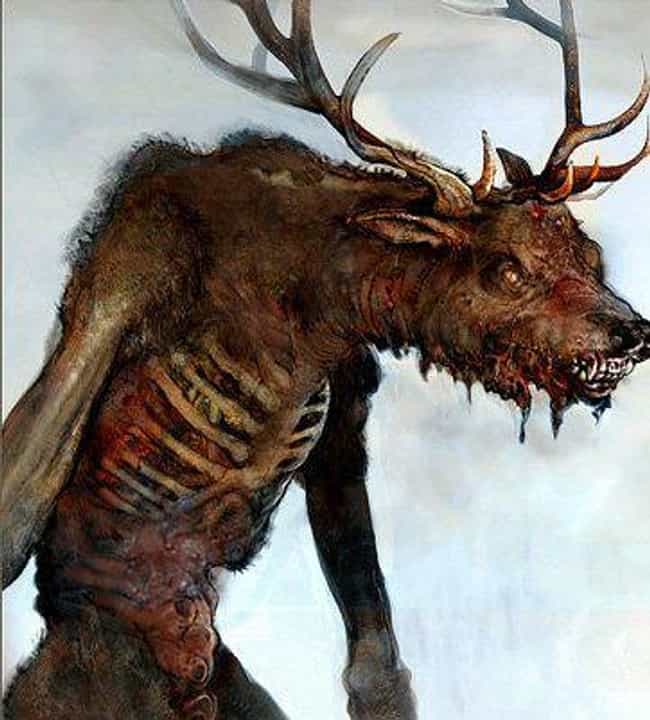
Image result for wendigo

WendigoAlgonquian Tribes

Cannibalistic beastly humanoid, possibly once human.

  • This creature is aligned with murder, insatiable, and cultural taboos against “normal” behavior. They’re also associated with the winter, the north, coldness, famine, and starvation.
  • The Wendigo is bigger than a human, and whenever it feeds on human flesh, it grows! It never gains weight and will always appear thin. They’re always hungry so watch out!!
  • There’s also an explanation as to why they may have been human once before turning into the Wendigo. When they were human, they may have been incredibly greedy. Or if the human was in contact with Wendigos for too long, they would become one.
  • Powers include: mimicking human voices, possession, controlling weather, manipulation of darkness (sunset), control of forest creatures, healing, and incredible strength and speed.
  • Believe it or not, there is a psychological disorder called the Wendigo Psychosis. People diagnosed crave human flesh even though they have access to normal food sources.

Downsizing Your Writing

Inspired solely on the act of decluttering a home, we’re talking about a part of editing some people dread: downsizing the finished product.

hoarding.gif

There is a such thing as writing too much. Spending an excessive amount of your time world-building all at once, having long conversations between characters to reveal information, or describing your characters in great physical detail and not focusing on the plot. These are examples! There can be all kinds of details you may be able to omit!

If you find yourself growing insecure or anxious about your ability to write effectively for an audience, you may want to begin the downsizing process.

Those moments too large (or too long)…revisit them. Break it down and see what can be taken out. What’s important to your writing is showing your reader what’s going on around your character or how your character(s) perceive the world – not telling your reader. They won’t feel it.

Small details may be important to hold onto so save them in a note on the side. They might be able to be woven into the narrative in a flowing manner.

Try to set a time frame in which you’ll work on this form of editing. And if you have to – do it more than once. You’ll realize how a whole paragraph may only needed to be one sentence.