Feels So Bad To Do Good; THE ANTI-VILLAIN

Last time we spoke at great length, I was ranting and raving about anti-heroes and what it takes to write one. I thought it was time we take on the opposite of the anti-hero: the anti-villain.

There’s a big difference between these two archetypes. The anti-hero is the character who is striving for goodness but does a few bad things along the way. No matter what, the reader is still rooting for this person to get their life together and get to their goal! However, the anti-villain is the character who has a goal in mind, favorable characteristics, or has a sappy backstory that makes you feel sorry for them…but they still are not-so-good and we kind of don’t want them to get in the way of our hero getting what they want/deserve. They aren’t entirely evil as some would think villains are or can be.

What does it take to craft the ideal anti-villain? Let’s chat about it!

  • CONNECT THEM TO YOUR HERO

    Voldemort killed Harry’s parents and left him with a scar; boom – connection. Black Jack Randall is Claire’s husband’s ancestor and has a fascination for Jamie; boom – connection. Scar is a part of the family (although, outcast) on Pride Rock; boom – connection.

    Having a connection to the hero assists in the hero’s character development. Whether that ends up being a good thing or a bad thing is up to you. Plus, backstory is imperative to any character’s existence. We must know where they came from in order to understand who they are today.
  • NARROW DOWN WHICH ONE THEY ARE

    There is a list of types of bad guys all over; but what makes this particular not-so-bad guy bad?

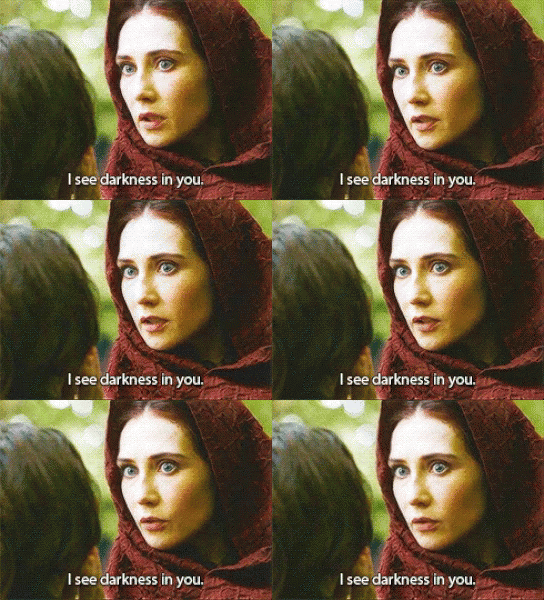
    First, we have the well-intentioned extremist. This is the one who has a goal in mind, it’s a good one, but they can’t seem to get to that goal without going to the extreme. And we mean in a bad, bad way. The most common thought in the AV’s head is: “this is for the greater good.” Which, I guess it could be, but did they really have to go ahead and try to kill a crazy amount of people to get there? No. A great example of this (that isn’t Thanos) in literature is Melisandre in A Song of Ice and Fire. She firmly believes that Stannis Baratheon is Azor Ahai reborn, and would kill as many needed to get him the throne. Even Stannis can be considered an extremist of sorts.
Then there’s the noble baddie. This one sounds like it’s not going to be as terrible,right? Well, lo and behold, this one is. There’s a reason behind their attempt at evilness and a particular code they would rather not break. What usually happens is – this individual is trying to be the bad guy; says they are going to do these terrible things…but when it comes down to actually doing anything, they have a harder time following through. An example of this one is Crowley from Good Omens. What do you get when a demon is on a mission to spread sin for a very long time? Well, he ends up being fond of his target and doesn’t want them to die by Apocalypse.

My personal favorite is the villain in name only. This one is exactly what it sounds like: a person who is simply opposing the hero. They aren’t evil, they simply challenge the hero and are their opposite. If the tables were turned, we would probably view that character as the hero and vice versa on their counterpart. A classic example of this would be in the original stories of Sherlock Holmes. Anytime Sherlock discovers the perpetrator is simply a victim of circumstance, and explain themselves to Mr. Holmes…they usually are let go without consequence. It was simply a story to tell about a bad guy who wasn’t all that bad.

Last but not least, we have the woobie villain. I didn’t know where the name came from, so I had to look into it a bit. First, a “woobie” is a name for the type of character who make you feel extremely sorry for them. I know exactly who you’re thinking of when it comes to an example of this, and no, I will not say her name. (Carrie.) But what do you do when you have a character who is terribly torn down and can’t take it anymore? They become the antagonist. While the name I will not mention (Carrie) is an example of this, I want to highlight another classic “I feel terribly sorry for her” villainess…Elphaba. If you don’t know her story, then you don’t have a heart. But seriously, go read the book or watch the play. It’ll make you mad to watch the 1939 Wizard of Oz.

If I had to pick my ideal anti-villain archetype, it would have to be the woobie. Backstory is vital to this villain, granted it is for all characters, but something about building a really strong connection with the villain and understanding where they are coming from when they turn evil…that’s the good stuff. Like the monster from Frankenstein or…Carrie, I guess.

Do you have any well-crafted anti-villains? Or do you have a favorite in mind? We would love to hear about it!
Set Goals That Excite You!

I don’t know about you but when I’m excited about anything I put my whole self into doing it. Almost to a point of obsession, I devote myself to that task. For example, bullet journaling. I told myself that I wanted to bullet journal so I made sure I had the perfect one and the prettiest markers and I was going to bullet journal every day!

It was something that I knew would make me happy and I was excited to start my day journaling. You need to find that goal. Something where you wake up and that is the first thing you want to try and accomplish for the day. It could be working out, listening to 30 minutes of an audiobook, or jotting down new book ideas. Basically anything that won’t give you the mentality of ‘oh, I’ll just do it later.” 

Your goals are waiting to be reached! And we want to help you get there! Follow us for more Monday motivation on here, Instagram and Facebook!

Happy Monday!

How To Gain The Confidence You Need As A Writer

Having confidence as a writer lets you express yourself freely. However, to do so you need confidence in yourself and in your writing! Do you worry that your writing isn’t good enough? Well you are not alone, and we have compiled some ways to lift your writing confidence:

Practice Writing Regularly

Writing is just like any other skill or hobby, and practicing regularly will help you improve. 

Read Widely

You are probably already an avid reader, but try reading something out of your norm. Pick up a new magazine, blog, or a genre out of your comfort zone. You will learn new techniques and find out what resonates with you. 

Learn About Writing 

In order to perfect your craft and build confidence you need to learn the in’s and out’s of writing. Specify the writing you want to go into, creative writing, blogging, memoirs and learn more about it! The more you learn the more you know!

Ask For Feedback 

Asking a fellow writing friend for feedback is a great way to help improve your writing. I know it can be daunting getting your work critiqued, but once you edit based on the feedback you will have more confidence in it!

Submit Your Publication

This one can also be pretty daunting, but if you submit your work to a blog and they post it that is a big confidence boost! Follow the tips above and make it as good as you can before sending it in. You can also enter competitions to get your writing and name out there. There are so many outlets to explore and that is another reason why you not only have to learn about writing, but the writing world as well. It will be easier to navigate once you build yourself a map. 

All your hard work will pay off.

Happy Writing!

10 Tips To Enhance Your Writing Space

No matter what kind of writer you are, you need a dedicated space where you can be productive without distractions. You need a space where you love working that can inspire you and keep you focused! So continue and find out how you can enhance your writing space!

  1. Choose your space.

This may seem obvious, but you need to find your own space that you are happy with. Don’t go with your obvious choice either, take a look at your space and weigh out your options. 

  1. Make it comfortable.

Start with your desk and work from there, you will be spending most of your time there anyway. You want positive feelings all around! Hang up your favorite photos or quotes and make it feel like your own. Use colors that bring you joy rather than worrying about everything coming together perfectly. 

  1. Add a plant.

You’d be amazed as to how adding a simple plant can heighten your mood, or put your mind at ease. Many studies show that plants can reduce stress too!

Consider something small and easy to take care of like an air plant (Tillandsia), snake plant (Sansevieria), philodendron, or a spider plant.

  1. Pay attention to placement. 

Height plays a very important role with all factors. The height of your desk, your computer, the top of the shelf. You want everything to be easily reachable and set in a way where it doesn’t strain your body. You may even want to consider getting a standing desk. 

  1. Get the right light. 

Lighting! Lighting! Lighting! It plays a very significant role in your writing space. Natural light would be best, but sometimes we don’t all have that luxury. The next best thing to natural lighting is LED lighting. When doing night time work, you will want to avoid blue lighting, so try and find something more warm. 

  1. Limit distraction. 

Turn the TV off and try to tune into your work. Put the gadgets away and anything that can distract you. Check out our post Motivational Apps To Start Your Day Right for apps to help you reach your work goals. And if noises distract you try investing in a pair of noise canceling headphones. 

  1. Declutter regularly. 

You don’t want your workspace to feel like a chore. So make sure it is up to your clean standard after you finish working. A cluttered desk will not inspire creativity! Everything around you should be in support of your goals. 

  1. Consider having multiple screens. 

These are not for distraction! But imagine having a screen where you can begin your story/write ideas and another where you can conduct research. It might boost your productivity and keep you focused on your current topic.

  1. Display your inspiration. 

This one is so important we need to say it in a few ways. Constantly seeing your goals and writing them out is a great way to achieve them! Read our Vision Board post for some more inspiration on how you can create your own vision board and reach your goals faster!

  1. Fill your space with the things you love!

Don’t forget to put your personal flare on everything– and we mean it!

New Audiobook Releases!

Welcome audiobook lovers! Each month we feature new releases that we helped produce alongside some of our great authors. If you like to stay up to date with the releases follow us on facebook and instagram!

Our audiobooks will always range in genre, so there’s something for everyone! Take a peek into the book below and see if it’s something that interests you. 

Dive into a new world, laugh your worries away in a romantic comedy, or open your heart to love with one of these amazing audiobooks. Let us know what you think!

Happy Listening!

Keep At It!

Only you can push yourself to be the best you can be! So keep doing what you love! Write write write!

We have a lot more motivational blog posts and inspiration to spark your next idea, so follow us for more literary fun!

Happy Writing!

Be Open to Feedback and Criticism 

As a writer, it is important to be open to feedback and criticism. While it can be difficult to hear negative feedback about your work, it is an essential part of the writing process and can help you to improve your skills and grow as a writer. Improving your Writing Skills: One of the biggest…

Write about What you Know

Writing about what you know can be a powerful and rewarding experience for any writer. Improved authenticity: One of the biggest benefits of writing about what you know is that it can help to create a sense of authenticity in your work. By drawing on your own experiences and knowledge, you can create work that…

Set aside time for Self-Care as a Writer 

Writing can be a demanding and emotionally draining process, and it is important to take breaks and recharge in order to avoid becoming overwhelmed and burnt out.  Avoid burnout! One of the biggest benefits of self-care for writers is that it can help to prevent burnout. Writing can be an intense and demanding process, and…

Monday Motivation

Our biggest advice to writers is simply to write. As elementary as that sounds it is the best way to warm up your brain. Just as athletes need to get warmed up before a game or even practise we encourage writers to write freely before thinking about their next chapter or book they want to start. 

You need to fill the page with as many ideas and thoughts as possible in order to find the best ones! 

Happy writing!

How to Warm Up Your Writing Brain

Transcribe your thoughts to words faster by prepping your brain to prepare for writing. The purpose is not to create publishable material, but to get yourself ready for it!

The best way to start is to have no judgement or expectation of the outcome. You are writing to write more, which in turn will lead to writing better! 

Write more —-> write better —-> write more

It is a beautiful circle of writing!

Now, in terms of the warm ups there are millions of prepared prompts and questions that you can search with a click of a button. Some other things you can do are write letters, write comments back to your viewers, or write about your life!

What do you do to warm up your writer’s brain? Share your favorites in the comments!