The Publishing Code

I love finding new resources for publishing news and trends. It’s such an ever changing industry that it’s very important to have reliable (and usable) resources. Today, I came across a new monthly column on Digital Book World called ‘Audience + Insight’ by Andrew Rhomberg of Jellybooks. I’m very excited about this because I think the information that will come out of this column will be immensely helpful for authors, publishers, and agents. It will be information that we can actually all put to good use.

Jellybooks is a company that has recently created a program that you can embed within an e-book and it tracks how readers actually read. It takes all those numbers that digital publishing spits out at you and helps interpret that data. Publishing has become a huge numbers game, but what does that actually mean and how we can use that data to write better books?

data

That’s exactly what this new column will explore and I can’t wait to see the results. It’s all about understanding the reader and audience better. This new technology is able to tell us what types of readers are engaging with which types of genres, how big the audience is for specific types of books, and what that audience looks like. I can only imagine that astounding, and maybe even shocking, new information will be found.

There also seems like there will be other great information shared on this column as well, so I hope you continue to check it out with me. We are in the middle of a publishing evolution and we can never have enough information. Write on.

The Value of a Memory

We talk often about why we write, how/when we write, and how to write. But what about the value of the act of writing? Why do something if we don’t understand it’s importance and benefits? An article in The Courier-Journal captured exactly why writing is extremely important and moreover, how it benefits the writer themselves.

Angela Burton teaches ‘Oh, I Remember’ writing workshops in retirement homes in the Louisville area and the classes are quickly spreading. This is one of the best ideas I have heard in a long time and it really made me think about why we should all be writing. Seniors in the retirement home meet weekly, bringing along their weekly writing assignments. They use the class time to read their writing to each other. Most of the stories are about their childhood, people who have long passed on, places they have visited, losses they have endured, and historical events they have witnessed.

Many of these seniors feel isolated, alone, and segregated from the life they used to have. Most of them feel like they no longer have a purpose and that their life is already over, even though they are very much still alive. The act of writing and sharing lets them relive their happiest moments, process the loss they still feel, and learn new facts about their friends. At the end of the day, writing is therapeutic, relaxing, and rewarding. These seniors feel like they are leaving something behind, that otherwise would be lost. They feel as if they still have something to contribute to society.

senior

For me, that perfectly captures the spirit of writing. Writing is meant for communication, for preservation, for learning. We write to share our stories, whether they are figments of our imagination or real life events. We write as therapy to make ourselves feel better, whether it is an e-mail that never gets sent, a poem about a life event, or a novel length memoir. Writing is an accomplishment, something to be proud of. Our sense of purpose is never clearer then after a heartfelt and honest writing session.

The effects these writing classes are having on these senior citizens emphasizes why we all need to be writing. The next time you pick up a pad of paper and pen or sit down at your computer, just stop to think for a few seconds. Think about why you are doing this and how it makes you feel. Take that knowledge and treasure it for your entire life. Never let it go and never stop writing. Write on.

Fifty Shades of Success

There was recently an article in THE GUARDIAN by Hannah Ellis-Petersen about the FIFTY SHADES OF GREY phenomenon, due to the most recent release of GREY. If you aren’t a fan, you are probably beyond fed up with all the hype. When are we going to stop talking about it? Why do we care so much?

fiftyshades

Hannah’s article perfectly captures why we should never stop talking about FIFTY SHADES- it has completely transformed the erotica genre, let alone the publishing landscape itself. Despite if you read the book or not, nor if you find the genre enticing or sickening, there is so much we can learn from this single book.

As we all know, the book was self-published fan fiction before being “discovered.” The author was unknown and the genre was taboo. Critics are harsh on E.L. James, many label her writing as “boring and clunky.” Some aren’t afraid to say that it is the most poorly written book to ever be published. Putting all the book’s challenges and criticisms aside, somehow it still managed to do the impossible- becoming one of the most read and talked about books of the past few years.

It is now very clear what made this book so successful- the readers. It proved that all readers are really looking for is a good story and they don’t care how they get it. Historically, as Hannah points out, the publishing industry’s opinion used to be the only thing that mattered. If they didn’t like your writing then you were out of luck, it wasn’t getting published. Their opinion was mostly based on the literary style and quality of writing. We are now seeing that readers have a completely different opinion how what makes good writing and that opinion is really starting to matter.

fiftyshades2

Not only did FIFTY SHADES start to force writers/authors to think more about their audience rather than their editors or agents, it also catapulted digital publishing. It showed that digital publishing is actually a fantastic way to publish quickly, build a platform, and reach the masses. The print publisher followed the trends of digital publishing when releasing the print books, releasing each book really close to each other. “Thick and fast” worked in the digital world, why wouldn’t it work in the print realm as well?  FIFTY SHADES shattered traditional print habits and never looked back.

FIFTY SHADES OF GREY also completely legitimatized the erotica genre, pushing it from the back of the book shelf into the spotlight. It took what many readers want (a deep love story) and cast it in light of a completely different world (BDSM). It was new, intriguing, and risky. It was wanted, or perhaps it was needed. Reading should be enjoyable and no one can be the judge of that better than the readers themselves.

That is why we shouldn’t stop talking about or learning from books that overcome the impossible, whether we want to rip the pages to shreds or keep reading. Write On.

The “Arc” of Writing

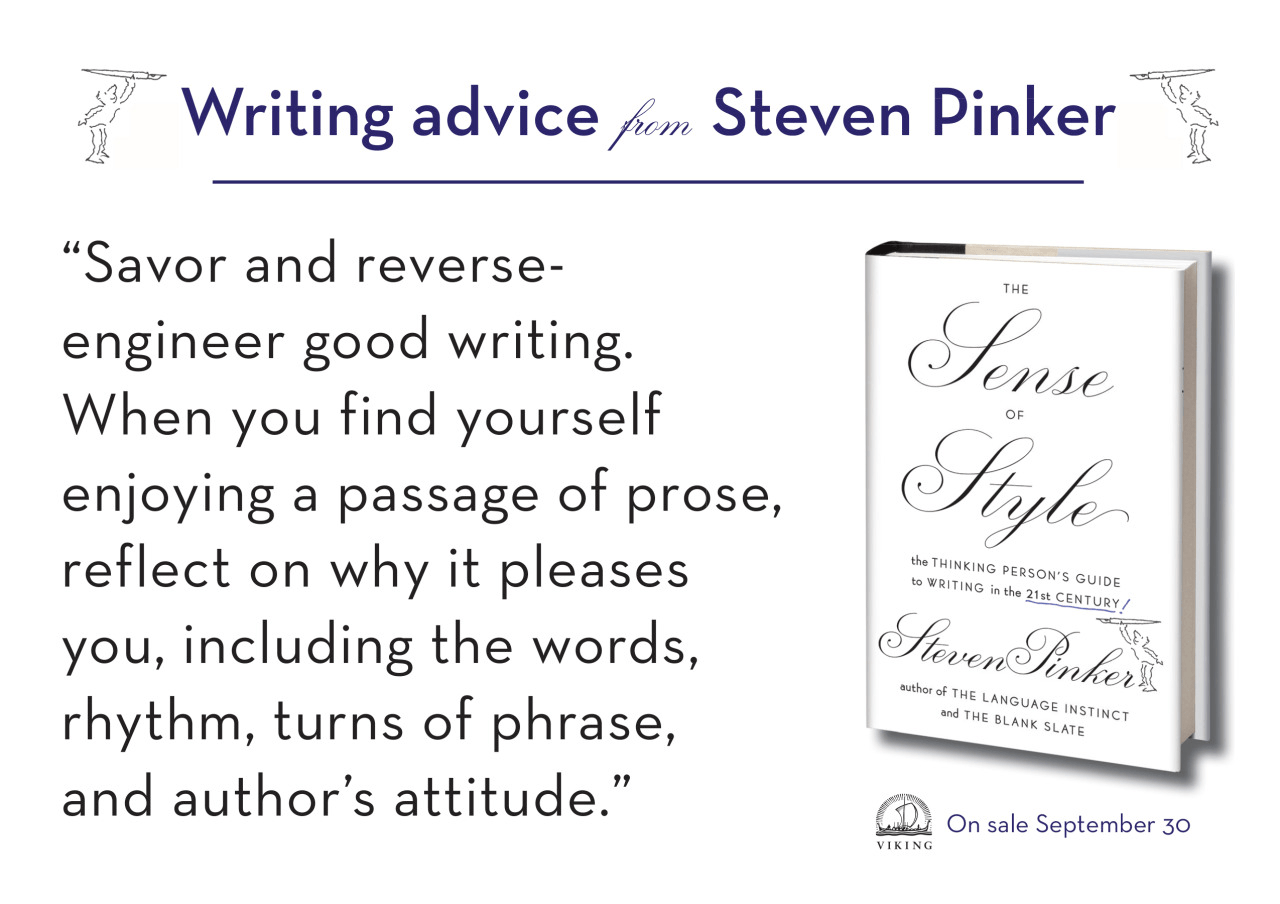
While on the topic of technical writing, I came across an article on Business Insider by Chris Weller that talked about Steven Pinker’s “arc of coherence” while writing.

As Weller points out, our brains hate to work. As soon as something becomes a little complicated or confusing, it’s not enjoyable anymore. That’s the last thing we want our writing to be, so we need to make coherent and smooth sentences, paragraphs, and chapters.

Weller nicely explains how writing works in simplistic terms, “Nouns revolve around verbs to push sentences (and thus ideas or plots) forward. These sentences then get strung into paragraphs. Paragraphs build sections. Sections build chapters. Chapters build a book.” Each of these sentences, paragraphs, and chapters are “arcs.” The idea is to fit each “arc” together as naturally as possible, which Pinker refers to as “coherence relation.” To explain it a little better, Weller says that “coherence relations are the glue that hold arcs together.”

Having successful “coherence relations” is the key to smooth, easy, enjoyable reading. You don’t need to blatantly show the reader what you are doing- just the words around each other, the words that connect sentences, and the flow of chapters needs to make sense. Coherence is all that is needed.

pinker

But many writers fail to do this. Scattered thoughts, missing details, and dropped scenes make it harder for the reader to understand what is going on in the story. If you have to reread sentences, sections, or chapters again and again just to piece together what is happening you probably aren’t going to pick up another book by that author, you may not even finish reading the current book.

Good writing does take practice sometimes. Weller suggests that sorting out your ideas before you start writing helps this coherence to take place naturally, you want your writing to feel like “I am showing you something, rather than us figuring it out together.” Write On.

You Deserve To Write… And A Drink Too

Popular YouTuber (and now new author), Mamrie Hart, recently spoke with Co.Create about five things she learned about writing on her journey to publishing her first book based off her YouTube channel- You Deserve A Drink (also the title of her book. Mamrie, and the article itself, were refreshing and honest. Mamrie appears as a normal, everyday woman who happened to create something that stuck and actually became quite popular, perhaps beyond what she ever envisioned herself. With her new found success she had to figure out how to navigate it’s many challenges, one being how to write a book. I think we can all relate to her advice due to her light-hearted and down-to-earth personality. She paints the writing process in a humorous and realistic light.

Here are her “5 Keys To Writing A Book” summarized:

  1. Figure Out What To Write

Not only do you need to figure out what you want to write about, but you also need to have several other “sub-ideas” for every idea you have to make it a viable and enjoyable topic worth writing about. Mamrie suggests making a list of all your ideas you have to include in your book, then picking ones that are worthy enough to be published and that you can actually write a decent amount about. The order of chapters, and what to put where, is also challenging. You need to find what works for your story/book. Chronological isn’t always the way to go- it wasn’t for Mamrie.  Also, it is important to write down all your ideas, because a not so important idea at first might become an important idea later.

  1. Figuring Out What Not To Write

This is where all my editing posts will come in handy. Mamrie mentions that “half of writing is rewriting.” One of the hardest things to do is to decide what not to include in your book, especially if you are emotionally attached to it. This is where having an editor (or a trusted friend) is extremely helpful. They will be able to tell you more easily and honestly that they really didn’t need a certain paragraph, section, or chapter. Get rid of all the distracting material so you can enhance the necessities.

3.Figuring Out When (and Where) To Write

You need to create a writing schedule that works for you and gets the most out of your writing. You need to find out what the important factors for your writing process are. For Mamrie, she found out that is was more about the location than the time of day. She located an office outside her home that was solely for the purpose of writing and even went on writing “retreats,” where she knew most (if not all) of her time would be devoted to writing. Removing herself from her natural habitat was what made her writing successful, maybe its the same thing for you or maybe timing is a more prevalent factor. Play around with it.

mamrie

  1. Figuring Out How To Write

You learn a lot about your communication skills and speaking habits when you write. You might notice that you overuse a certain word or phrase. These habits are much more noticeable in writing so make sure you pay attention to them. You want your writing to be accessible to everyone. When you find your overused word or phrase (I know you will because we all have one) try out Mark Twain’s method I wrote about in another post.

  1. Figuring Out How To Keep Writing

Every writer hits that inevitable “writer’s block” when you just don’t know if you can continue on anymore. You need to find a way to break that block down and smash it into a million pieces. Mamrie creates weekly “To-Do Lists” to keep her on track on her goals. It gives her something to work towards and once she reaches those goals, she isn’t afraid to reward herself. The rewards gives her some time to clear her mind before she conquers her next list and also inspires her to complete her next set of goals because she wants that reward again. Mamrie also suggests doing small activities when you are really in a rut such as going for a walk/run or watching a funny movie.

Writing is not easy, but that does not mean we should be discouraged. We just need to find ways around the obstacle course of our next book. Write on.


The Colors of Success

Sometimes it is impossible to tell with any precision how the public will react to a book, even for someone working in the publishing industry. It’s not unheard of for a book to be successful for reasons no one even previously thought of. Sometimes I am pleasantly surprised with how well some books do, while other times I am disappointed with some books performances that had all the qualities to do well. What works for one book, won’t necessarily work for the next. At a certain point, people get tired of the same thing, the same story line, the same plot, or the same genre over and over again. This is when it becomes difficult to predict. Life is about variety and change, and so is publishing. People are always searching for the next “big thing.” This requires chances to be taken and gut feelings to be trusted. Sometimes the best we can do is make educated predictions based off of market and social media trends. Maybe it will stick, maybe it won’t. Maybe it will stick next time. Maybe it will take five more times.

Right now, two of the bestselling books on Amazon are coloring books… geared towards adults! Of all the amazing content out there in the abyss that is Amazon, coloring books? I was a little surprised to see that. My initial thought was who has time to color? I have a list of literary books I want to read that just keeps getting longer and longer, why would I pick up a coloring book? As I thought more and more about it over the weekend, a coloring book topping the charts of Amazon actually made me really happy.

colortwo

Think for a moment about the purpose of a book. The rudimentary purpose of a book is to transport the reader into a different world. To remove them from their chaotic life, even just for a brief moment, and put them into the book’s world. Well, this is exactly what coloring books do too. They give the readers/artists a mental break from their own life. It’s a mindless activity meant to relax and calm the soul, where your biggest problem is what color to make that flower in the corner. They also give the reader/artist a chance to be creative, to take something and make it their own. They can make their world any color, shade, or texture they want- wherever they please. You can also color outside of the lines, if you wish, by adding elements of your own design- adding on to the content that is already there. You are the captain of this literary adventure, not the author.

colorone

Don’t be afraid to take chances with your writing and think outside the lines that are already there. No one ever knows for sure what is going to sell from one published work to another. Success always requires the biggest risks.

Who knows, maybe a Mad Libs book will top the Amazon charts next. Write on.