New Year, New Writing

I hope everyone had a fabulous holiday season and a very happy new year! I cannot believe it’s already 2016, where does the time go (like, for real)? The start of each year gives everyone the perfect opportunity to take a moment out of their busy schedules to reflect on what has happened over the past year, what they accomplished, what they didn’t get to do, and what they want to change for the coming year. This is a really great time for writers to sit down and think about where they want to go with their work. Are you  happy with your current success? Do you need to make any major changes to make yourself more successful? Is there something new you have always been dying to try? Do you want to write more or less? Do you want to try your hand at shorter or longer works? The new year isn’t just the perfect time to reinvent yourself, it’s also the perfect time to reinvent your writing.

newyear

If you are looking for a little new year inspiration, I came across a fun article on Business 2 Community this afternoon that gives some ideas for writer’s new year resolutions. Hopefully these suggestions will help inspire you to make your own changes. Change is the only way to continually see the results we want. If we become stagnant and comfortable, soon enough our ‘luck’ will run out.

  1. Write that ‘thing’ you have always been talking about. 

The best new year’s resolution for a writer is to stop talking and start writing. We all have that something that we have always talked about writing, but for whatever reason we haven’t picked up the pen yet. We may have even written countless other stories in the meantime, but that one project just can’t seem to make it’s way to fruitation. Think about what’s holding you back and throw that negativity out the window. 2016 is all about action and change, make it happen so you can move onto the next thing on that growing bucket list of yours.

2. Visit the places you write about or want to write about. 

The best way to effectively write a scene, chapter, or story is to write from experience. Plan a couple vacations or day trips this year to visit those places you write about. Spend some time writing in those places as well. Visual inspiration is often just the thing we need to bring our writing to life.

3. Read a book that has had a big impact.

Pick up a book that has made a difference. Read a book that has changed history, that has left many readers talking years after it’s publication. Think about why this particular book was so successful. Become part of it’s history and use it to create your own.

4. Learn a foreign language. 

This one is certainly a daring and daunting task, but one that could change the course of your writing forever. Learning how other languages construct sentences, how they use different words, and how they express emotions can open up countless new avenues for your own writing. You don’t need to become fluent is the language, just familiarizing yourself about a particular language’s ‘rules’ will teach you a lot in itself.

5. Study your own writing. 

Look back at what you have written over the past year and learn from it. Is there a particular mistake you catch yourself making over and over again? Are there certain words you use too much? Do you find all your characters to be eerily similar? Make note of the things that have worked well too. Your biggest teacher is often yourself.

Here’s to another great [writing] year! Write on.

Make Criticism Feel Good

One of the hardest parts of writing is the criticism that naturally comes along with it. Perhaps this even holds some of us back a bit. Writing makes you vulnerable. The whole point of writing is to pour your heart out onto the page (for days, months, or even years), put it out there for the world to see, and then wait for the reaction. We all hope for stellar reviews across the board and thousands of copies to be sold. But the reality is that no matter how perfect your writing is, there is always going to be someone who just doesn’t like it. It’s very hard to please everyone and that is one of the first things you need to accept if you are going to have a fulfilling and successful writing career. But, it’s not easy. Those comments hurt and often stick with us for years to come, popping into our mind most often at the worst possible time. Writing isn’t just about becoming a better writer, it’s also about becoming a better version of yourself. Writing teaches us many things and how to handle failure and negative criticism with class is just one of them.

I was so happy to see an article about criticism on Elite Daily yesterday- especially at this time year. Things are starting to wind down and we are starting to look into next year. We start setting our goals for the upcoming months, goals that most likely include more risk being taken and pushing yourself farther than you ever done before. With bigger risks often comes bigger criticism. But don’t worry, it’s not all bad. These pieces of criticism will most likely yield your greatest lessons. Here’s a few things that Merylee Sevilla has learned about enduring criticism.

  1. Critics will always exist.

There is always going to be someone out there that has something negative, no matter how big or small, to say about your work. The most important thing to remember is that they are criticizing you based on their own opinion. There are still many other people out there who absolutely love what you are doing- focus on that.

2. Grow tough skin.

Don’t let other people’s negativity get to you. Instead of feeling down or discouraged, use their criticism as energy. Energy to become a better writer and to perhaps win them over the next time around. Turn negativity into positivity.

IMG_3748

3. Learn how to become innovative.

There’s a lot of criticism out there about not being ‘original’ enough. It’s really hard to be original. With the ease of the internet, more stories are getting published each day than ever before. Take your focus from trying to be ‘original’ and start being ‘innovative.’ Put new spins on stories that have already been done, break the rules a little, and aim to surprise your readers. Innovation is a much more realistic and just as effective goal.

4. Just go for it.

Your biggest regret will be holding back. If you are afraid to publish a story because of the possible criticism that might come along with it, you are missing a huge opportunity. A negative comment might hurt for a few days but the pain of a missed opportunity will never go away. Be brave, be bold, and publish your work as you imagine it to be.

Write on.

Goodbye Distraction, Hello Productivity

Sometimes the hardest part of writing is well… writing. Our lives revolve around tight schedules- work, exercising, errands, taking are of family, school, cooking, cleaning, etc. When we do finally find that one hour of down time sometimes we just like to relax and turn our brains off for a while. How does one ever find time to write without devoting their entire existence to it?

Finding time to write isn’t the only writer’s conundrum. Staying focused during that small window of writing time we have is proving harder and more challenging with each day. With the internet, we basically have the entire world at our fingertips. Click on an interesting news article, get lost in the absurd readers comments, click on an ad to your favorite clothing store and before you know it three hours of your life completely gone. Not to mention, quite possibly your only writing time you will find that week with your upcoming hectic schedule at work and with family.

That’s why I was really happy when I came across a list of nine distraction free word processing apps on Field Guide, for both your mobile phone and desktop computer. My first thought was, “There really is a God!” and my second thought, “My readers! Must share with my readers!”

So here I am…

distraction

Check out the list for yourself below. I included a very brief description of each app, some are free while other cost some money, but I would suggest looking into each one a bit. They all have some really unique things to offer and you need the find the right one for our needs and writing style. I also provided links to their websites as well. If anyone has experience with any of them, feel free to share with us all. Learning from each other is one of our greatest gifts.

  1. Typed (Mac) – $29.99

Allows you to cancel out distraction from the outside world while using the app. You can hone in on just one specific paragraph and listen to soothing soundtracks that block out other distractions that might pop up. The app has the benefit of basic word processing tools such as word counts and auto-save.

2. Write (Windows) – Free

A noise free and distraction free app that enables you to finish your novel without those outside distractions. The app is equipped with many tools to help you become a better writer,such as a productivity calculator, cloud sharing capabilities, auto-complete, and mark-ups.

3. OmmWriter (Windows, Mac, iOs) – $5.11+

Provides a very basic and completely distraction free writing zone. It doesn’t have too many frills to it but it certainly gets the job done. It also has many customizable features, which might make you feel more comfortable using it.

4. Writer (Chrome) – Free

If you want to write within your web browser, this is the app for you. It blocks out all distractions and provides basic word processing tools as well. There’s also a cool full screen mode that will assure you don’t give in to those outside distractions.

5. Hemingway Editor (Windows, Mac, Web) – Free-$9.99

Provides a basic word processing program that allows you to get straight to the point- writing. It also has the ability to critique your writing as well (yikes!).

6. iA Writer (Mac, iOS, Android) – $4.99-$19.99

Another very basic word processing app that encourages you to focus on your writing and nothing else. It also provides helpful writing stats as you go along at the bottom of the app.

7. Byword (Mac, iOS) – $5.99-$11.99

Has a very clean writing template that really lets you focus on the words you are typing and nothing else. It also has cloud syncing abilities and you can even publish your work directly from the app if you wish.

8. Calmly Writer (Chrome) – Free or .99 cents

A very relaxing and basic writing template that allows you to completely escape the world around you. The paid version has extra tools such as Fade Mode, Dark Mode, cloud syncing abilities, and is distraction free.

9. Ulysses (Mac, Ipad) – $19.99-$44.99

Is by far the most “advanced” writing app on the list, but it still holds true to its prime focus- being a distraction free writing space. It houses handy organizational and navigational tools that might just be perfect for a scattered and busy writer.

Write On.

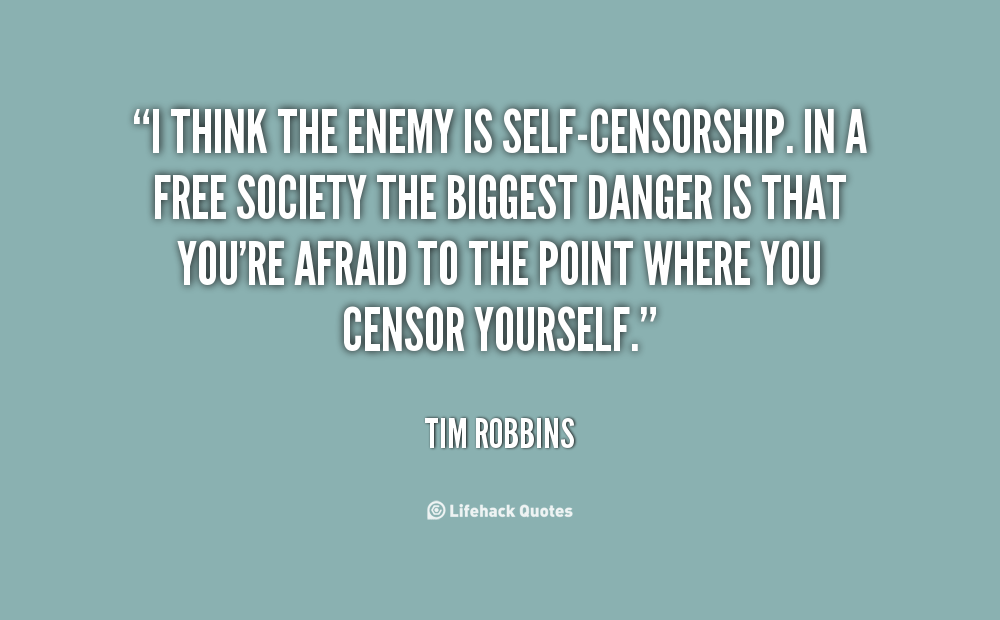
Battling Censorship

While browsing Huffington Post’s website today, I came across an article on a topic I don’t believe I have talked very much about on this blog (if at all)- censorship. This is a daily struggle that authors of all genres experience on many different levels. Obviously, censorship is most important  when you are writing nonfiction, a memoir, or biography. When things get too political, violent, or intimate we tend to second guess every word we put down on the page. Am I going to offend someone? Is the scene too vulgar? I am going to drive readers away? We lose focus of our goal, telling a truthful story, and spend more time worrying about what details to spare and what we might be able to paint in a ‘prettier’ light.

Fiction writers deal with the very same thing, in a different way. Our society has ingrained into our brains to always worry about what other people are going to think. After each scene, page, or chapter we are left wondering how readers will respond to our writing. We forget what we want and start writing for what we think other people want. Your story slowly becomes a product of societal influences, rather than the story you originally set out to write.

Whether we are contemplating which details of our dark past to leave out or searching for the ultimate ending we think our fans are looking for, Rachel Thompson perfectly captures the downfalls of censorship. We may feel like we are doing the right thing in the moment, but the only person you are cheating in the end is yourself.

censor

Censorship allows others to made decisions for you.

If you find yourself censoring your writing, then your writing is no longer truly yours. You are letting outside influences affect you to the point that you are actually changing your work for them… crazy, right? It happens so naturally and quickly that sometimes we don’t even realize it. Your finished product may be more ‘public-friendly’ but was that really the story you set out to tell? The best thing you can do for your writing is stay true to yourself and your story.

Shame leads to censorship.

Our society dictates what’s right and wrong. When something ‘wrong’ happens to us we think twice before telling someone about it. What will people think of me if I confess what happened? Will they believe me? Will they be embarrassed of me? When we think about writing about something ‘wrong’ we ask the very same questions. Shame is a powerful tool that keeps us from sharing our emotions and experiences. Shame keeps us from expressing ourselves. Hiding in shame won’t solve any problems, you have the right to speak your mind. I bet you will find many new supporters along the way and that shame will quickly wash away, in turn making you a stronger and better person for it.

Censorship is risky.

There’s always risk involved with saying what’s on your mind. Someone is going to disagree with you or be offended by what you had to say. Some will even voice their opinion back at you. But censoring yourself is also risky. You want to be happy with your writing and you want your writing to make you feel good. Will you find happiness in writing that isn’t truly what you had meant it to be? Probably not. You need to ask yourself what’s riskier. The best writing pushes risk to its extremes. Be a little different, speak what’s on your mind, and take the risk.

Write on.

Swinging and Writing

Everywhere we turn, there’s a potential lesson to be learned. Life is filled with challenges and triumphs- each waiting with a new perspective to be gained. There are good lessons. There are bad lessons. But as long as we keep changing, evolving, and (most importantly) learning- we are winning. Life isn’t about hitting every shot you take, it’s about taking the swing.

Writing is a lot like life. We learn new things everyday from our own writing. Some things are good, some are bad. Some things are technical realizations, while others are self-reflection. Whatever the case may be, as long as we keep writing, keep swinging- we are winning.

I read an article today by Lauren Jessen on The Huffington Post blog that highlighted the four lessons she learned while writing. I know we can all relate to and find inspiration in the lessons she learned. One of life’s greatest gifts is learning from each other. If you play the game alone, you won’t ever succeed.

lessons4

1.There’s no wrong way to write your book.

What perspective do you want to write from? What point of view is best for your story? Which tense should you tell your story from? These are all very important questions, to which only you have the answers to. You know your story better than any one else. There’s no magic formula that’s going to tell you how to write your book. You are the only one that knows what is best for your story. It it feels rights, it’s probably because it is.

2. Know when to stop.

This is important, especially because I stress the importance of editing in pretty much every other post on this blog. Eventually you need to be happy with your end product, flaws and all. There’s no such thing as absolutely perfect writing. There’s always going to be that one comma you missed or that one word you jumbled. You need to accept your finished product and be happy with it.

3. Stop doubting yourself.

When you are feeling down or defeated, don’t dwell on it. Instead think about why it is you are feeling that way and take steps to fix it. If you fix the problem and learn from it, was it ever really a problem?

4. Write in pieces.

Don’t get overwhelmed with thinking that you are going to need to devote large chunks of your day to writing. Write everyday, but write when you can. If you can only get a quick fifteen minute session in, that’s perfectly fine. You will be a few sentences closer to finishing than you were yesterday. You can even jump around within your writing. Maybe you had a spark of inspiration for a particular scene- write it. You don’t need to write your story in order, that’s what ‘copy & paste’ is for. Write your ideas before they disappear.

Keep on swinging. Write on.

The Mystery Of It All

The mystery and suspense genre has always been historically popular, there was Edgar Allan Poe, Wilkie Collins, Arthur Conan Doyle, and even Charles Dickens. The genre has evolved over the years and I have noticed somewhat of a revival, if I dare call it that. It’s not that the mystery genre ever went “out of style.” It just seems like whoever I talk to, whether it’s a publisher, another literary agent, or a client/author, everyone is all about more mystery, more suspense, and more thrill. That’s why I was very happy to see an article on Bustle today about writing tips from Shirley Jackson, a true master of suspense. The article takes inspiration from Jackson’s newest book coming out August 4th, Let Me Tell You– in which the last section is a collection of essays and lectures on how and why she writes. I couldn’t possibly phrase Jackson’s advice any better myself, so here it is:

mystery2

1. “The very nicest thing about being a writer is that you can afford to indulge yourself endlessly with oddness and nobody can really do anything about it, as long as you keep writing and kind of using it up, as it were.”

2. “All you have to do … is keep writing. As long as you write it away regularly, nothing can really hurt you.”

3. “I cannot find any patience for those people who believe that you start writing when you sit down at your desk and pick up your pen and finish writing when you put down your pen again…”

4. “I tell myself stories all day long, and I have managed to weave a fairy tale of infinite complexity around the inanimate objects in my house…”

5. “A writer who is serious and economical can store away small fragments of ideas and events and conversations, and even facial expressions and mannerisms, and use them all someday.”

mystery

6. “…with the small addition of the one element of fantasy, or unreality, or imagination, all the things that happen are fun to write about.”

7. “Now, no one can get into writing a novel about a haunted house without hitting the subject of reality head-on; either I have to believe in ghosts, which I do, or I have to write another kind of novel altogether.

8. “Using any device that might possibly work, the writer has to snare the reader’s attention and keep it.”

9. “I delight in what I fear.”

10. “All things are potential paragraphs.”

Write On.

Breaking Free of Self-Doubt

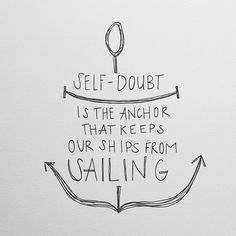
Let’s face it, we all have those days when we feel down and something is just off. Sometimes it’s for no apparent reason, while other days it’s because nothing seems to be going your way- whether you got a bad review on your book, a fan posted a nasty comment, or your editor told you that you need to basically re-write your next novel. These days make us start to doubt our ability to succeed. We start to question our talent and wonder if we truly have what it takes to keep going. When you put your work out there to be criticized a lot of good things can happen, but a lot of bad things will probably happen too. We need to find ways to pick ourselves out of that self-doubt and move forward. Every hit of negative criticism makes you a stronger and better writer.

selfdoubt

Today, author Holly Robinson shared four ways that she conquers her self-doubt in a post on The Huffington Post book blog. I thought they were pretty awesome ideas and that many of us could benefit from them- not just in our own writing worlds, but in our every day lives as well.

1. “Work With Your Hands”

Build/do something with you hands- bake something, do an arts project, conquer a landscaping project. Seeing the physical result of your efforts will help you gain some of your confidence back.

2. “Forget About Success”

Stop worrying about what other people think and remember that the main person you create your work for is you. Don’t be afraid to fail. As long as you are happy with the work that you produce, you are already winning.

3. “Stay Flexible”

Try new things- even if it’s just for a few hours. Try writing a different type of genre than usual. Craft up a totally different character than ever before. Create a world that seems completely bizarre to you. It will give you a break from your typical writing and you never know, it might lead you somewhere other than the trash bin.

4. “Keep Your Projects Warm”

Never stop working completely. If you aren’t up for a whole day of writing then just reread a few chapters, edit a few lines, or make outlines for future chapters. The second you stop working, you are letting your self-doubt win.

The only person that can make you succeed or fail is yourself. We all have days of self-doubt, but it’s how we break free that matters. Write On.

Keeping The Memory Alive

Author Warren Adler attributes memory to be the key to novel writing. Many writers depend on their memory to help spark ideas, describe scenes, and add a sense of reality to their fictional writing. Especially as an author ages, memory becomes even more important. When a key component to your life’s work starts to slip, it’s a devastating reality you won’t be able to erase.

To combat the looming memory loss and to keep his memory active, Adler talks about his daily exercises in a post on The Huffington Post book blog. Most of his memory exercises take place in the morning. Before he even gets out of bed, Adler practices his recall. He tries to recall every detail he can remember, starting with his earliest memory. He remembers his earliest sights and feelings as a baby. He recalls close family relatives, such as grandparents who have long passed away. He remembers what they looked like, what they wore, their mannerisms, and their persona. Adler recalls their addresses, phone numbers, birthdays, etc. He also vividly remembers their houses, all the small details- the smell, the sounds, the décor, even the layout to the rooms and furniture. He does the same for past girlfriends, old friends, and even recalls every teacher he ever had. Adler simply relives his life every morning with just his memory- sharpening it by the day.

memory

Adler points out that this is an exercise that works for him, though not scientifically proven. It’s an interesting method and at any age, one worth trying. As Adler mentions in his post, the brain controls everything. We must exercise it as much as possible, especially when our work depends on it. Write on.

The Writing-Regimen

Finding time to write is sometimes the hardest thing to do. We have other jobs, errands to run, houses to clean, and children to tend to. We say we will write when we have the time, but do we ever really have the time?

I love hearing about other people’s writing routines and regimens. There are so many different ways to make time to write, the process is intriguing. I found an article by Shawn Blanc on the Observer blog about his writing routine and why he believes in having one.

Every morning Shawn sits down at his desk and that’s his time to write. He sets a timer for 30 minutes and cuts off all his connections to the outside world. For the next half hour, all his energy and attention goes towards writing. This ensures that he finds time to write every single day. As Shawn points out, putting words down on a blank page is the hardest part. Carving out a particular time each day, forces Shawn to write more instead of just writing when he has the “time.”

routine

Despite the fact that Shawn already has a regimented writing routine, he is always looking for ways to improve its effectiveness. Currently, he doesn’t write much on the weekends and he mentions that he feels those effects on Monday morning. As the week progresses, his writing gets better and better. Having this type of self-awareness will make Shawn a better writer, the ability to recognize your weaknesses is half the battle. For some, that break might be beneficial but for others it might be detrimental.

I also particularly liked how Shawn actually starts his writing process for the next day, the evening before. He leaves a note on his keyboard about the topic he wants to write about tomorrow morning. This way, he can think about the topic before he starts writing and he isn’t scrambling to find a topic the next morning. If we think about our goals before we set out to achieve them, our mind is put at ease and we feel a little more ready to take on the day.

If you still haven’t found the writing groove that works for you, you might also want to check out my post on finding your own creative space.

Whether Shawn uses what he writes every day, or ends up throwing it out, at least he is writing. Write on.